Breathing is something you do automatically, but the way you breathe has a powerful influence on your body. It affects your posture, your level of tension and even how you process stress.
Most people develop breathing habits without realising it, and those habits can shape how comfortable or strained your body feels.
Becoming more aware of your breathing is a simple way to support your well‑being. It can also enhance the benefits of your chiropractic care by helping your body release tension and move with more ease.
Breathing delivers oxygen and removes carbon dioxide, but the movement of breath does much more than that. It influences your nervous system and provides stability for your core.
Your main breathing muscle is the diaphragm, a broad dome of muscle at the base of your lungs. When it moves well, it sends a calming signal through your nervous system and helps your body settle. Deep, diaphragmatic breathing is one of the body’s natural ways of shifting into a more relaxed state.
Stress alters your breathing pattern almost instantly. Your breath becomes faster and shallower, and instead of using your diaphragm, you start relying on the smaller muscles in your neck and shoulders to lift your chest.
This is useful in short bursts, but when it becomes your default, those smaller muscles stay switched on. They tighten, fatigue and contribute to the familiar tension many people feel across the neck, shoulders and upper back.
Breathing and posture influence each other constantly. Shallow chest breathing often pulls your head forward and rounds your shoulders, creating a slumped posture that puts extra strain on your spine.
That posture then restricts the movement of your diaphragm, making deep breathing physically harder. Your body gets caught in a loop: shallow breathing encourages poor posture, and poor posture reinforces shallow breathing.
The mechanics of breathing are closely linked to the structure of your spine and rib cage. Your diaphragm attaches to your lower ribs and lumbar spine, and the nerves that help control it exit from your neck. For your breathing to be efficient, these areas need to move well.
Chiropractic adjustments help restore motion to the joints of your spine and rib cage. This can ease tension in the surrounding muscles, including the diaphragm and the overworked accessory muscles in your neck.
When your nervous system is communicating clearly, your body can return to a more natural, efficient breathing pattern.
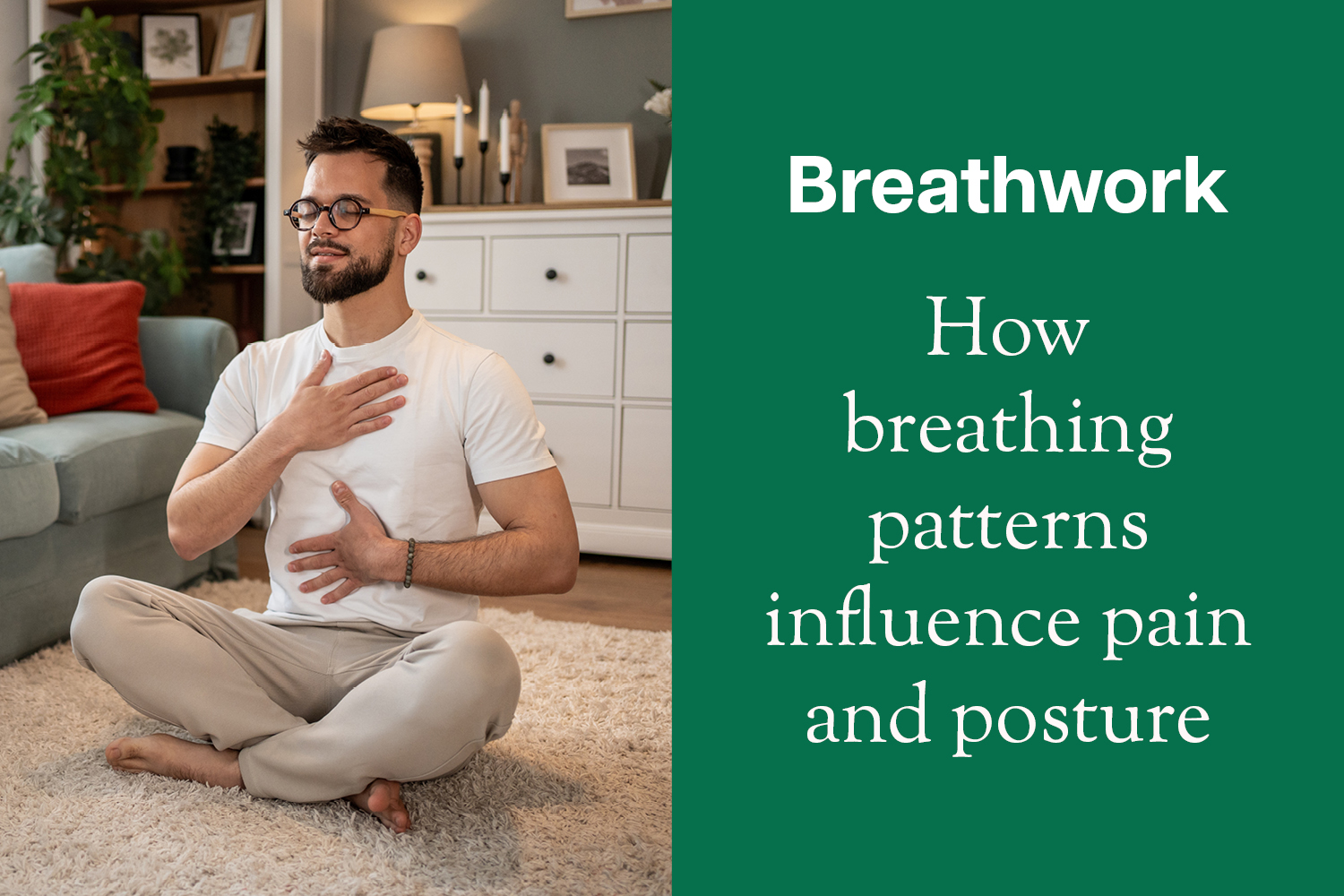
You can begin to retrain your breathing with a simple practice. Lie on your back with your knees bent and place one hand on your chest and the other on your belly. As you breathe in, let your belly rise while your chest stays relatively still. As you breathe out, feel your belly gently fall.
A few minutes a day is enough. The aim is not to force anything, but to guide your body back toward a calmer, more organised rhythm.
Your breath is a tool you carry with you everywhere. By paying attention to how you breathe, you can influence your nervous system, ease muscle tension and support healthier posture. It is one of the simplest ways to help your body manage stress and pain.
When mindful breathing is paired with a nervous system that is functioning clearly, you create a strong foundation for comfort and resilience. It helps you feel more at ease in your body and better able to move through daily life with steadiness.