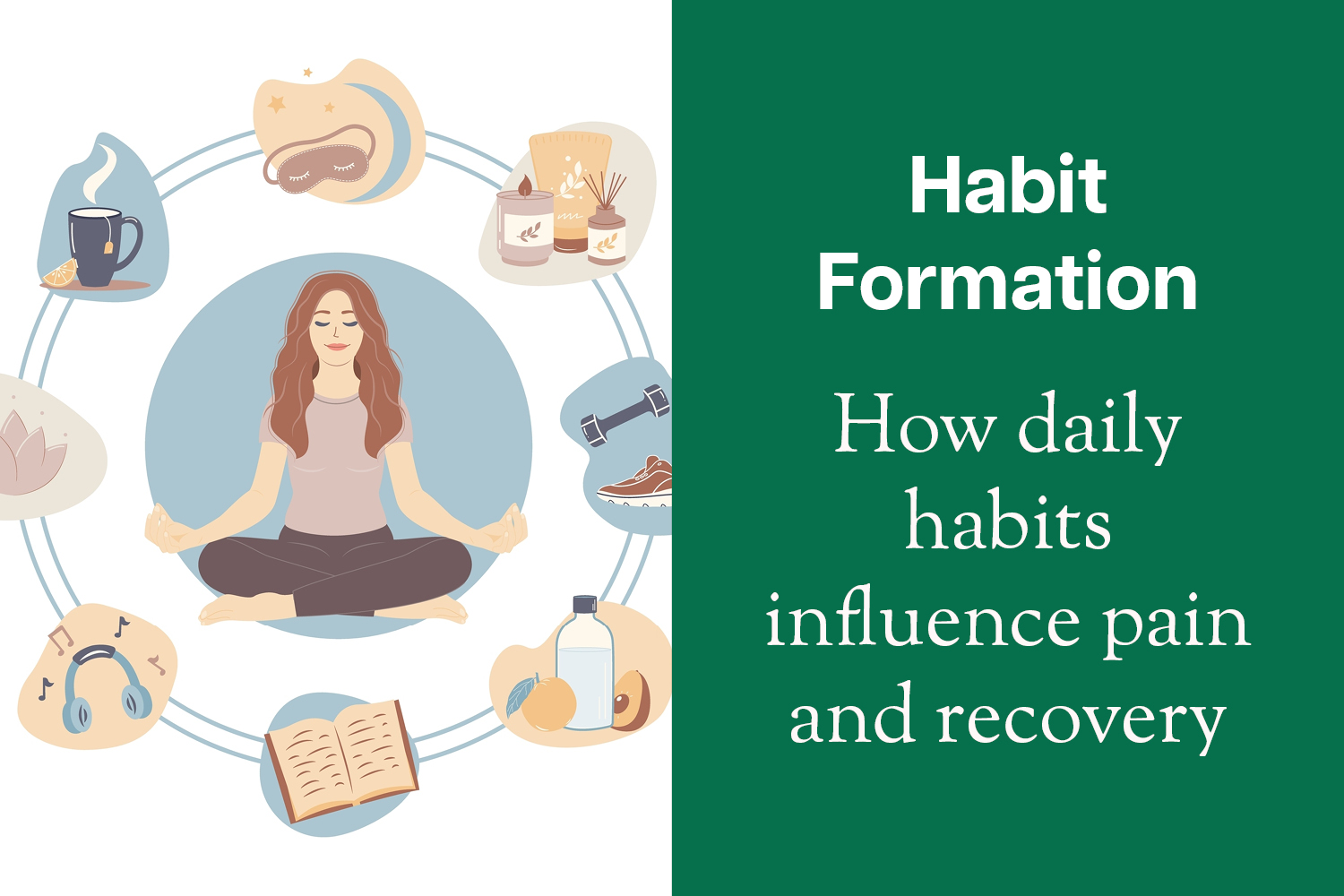
Daily routines shape far more than productivity.
The way you sit at your desk, how you hold your phone, or the position you settle into on the sofa all feed into patterns your body repeats without much thought. These small, automatic choices create the habits that influence how you feel, move and recover.
Your nervous system plays a major role in forming these loops, so the routines you fall into can either support your progress or work against it.
When your spine moves well, and communication through the nervous system is clear, it becomes easier to build habits that promote comfort rather than reinforce tension.
As chiropractors, we see every day how these quiet, repeated behaviours shape the way your body functions. The patterns you practise most often become the ones your body relies on, which is why understanding how habits form can make such a difference to your recovery.
Your brain is always looking for ways to conserve energy and make life easier. So, when you repeat something often enough, your nervous system stores it as an automatic pattern, or habit, so you don’t have to think about it.
Habits form through simple loops. Something in your environment provides the cue that sets the pattern in motion, your body carries out the routine, and your brain registers a sense of ease or comfort that encourages you to repeat it.
With time, these loops become the pathways your body relies on without much conscious input.
Once you understand that loop, it becomes easier to see how many of your physical routines follow the same pattern. A certain chair, a certain task or a certain time of day can nudge your body into the same position again and again.
Your office chair, for example, might encourage you to sit a particular way. It feels comfortable at first, so you settle into it without thinking. After a while, you simply sit like that every time you’re in that chair, often without realising you’re doing it.
Your body repeats patterns like these because they feel familiar, not because they are the most supportive. A slouch that feels good in the moment can gradually become the posture your nervous system treats as normal.
Over time, these routines shape how your body feels and moves.
The challenge is that once a pattern becomes automatic, your body tends to hold onto it. Familiar movements feel efficient, so your nervous system keeps choosing them.
You might lean to one side, favour one hip or default to a certain way of sitting simply because your body has rehearsed that pattern for years.
None of this means you are doing anything wrong. It just means your body has learned a particular way of moving. But when the pattern itself contributes to discomfort, it can make change feel slow.
Shifting these loops takes time because you are not only adjusting a movement, but you are also teaching your nervous system a new default.
Habits aren’t only stored in the brain; they’re reflected in the way your body moves. Repeated routines create predictable patterns of muscle tension and joint restriction.
Chiropractic care addresses this physical side of the loop by restoring movement where it’s been lost and easing areas of strain.
Improved mobility gives your nervous system clearer information about how your body is positioned and how it should move. With better communication between the brain and body, it becomes easier to adopt new, healthier patterns.
A well‑functioning nervous system is more responsive to change and better able to support habits that promote long‑term recovery.
Trying to overhaul everything at once can feel daunting. Small, consistent changes are far more effective. Instead of aiming for perfect posture all day, focus on sitting well for the first few minutes of each hour.
Habit stacking can also help. Linking a new routine to something you already do makes it easier for your brain to adopt. For example, after your morning coffee, you might do the stretches recommended for you. The existing habit becomes a cue for the new one.
Lasting change happens gradually. Understanding how habit loops work gives you more control over the small choices that shape your health. Each supportive action, no matter how minor it seems, strengthens a healthier pattern.
As these routines build, your body gains a more stable foundation for healing. This steady, practical approach helps you move away from pain and towards a lifestyle that supports long‑term well‑being.